
Not an App, an Engine.
Tarımus is agricultural decision and evidence infrastructure that works from parcels to portfolios. It is built around a single question: how do you represent a farm parcel's past, present and future as numbers? The analyses it produces are used directly and also flow as input to other systems.
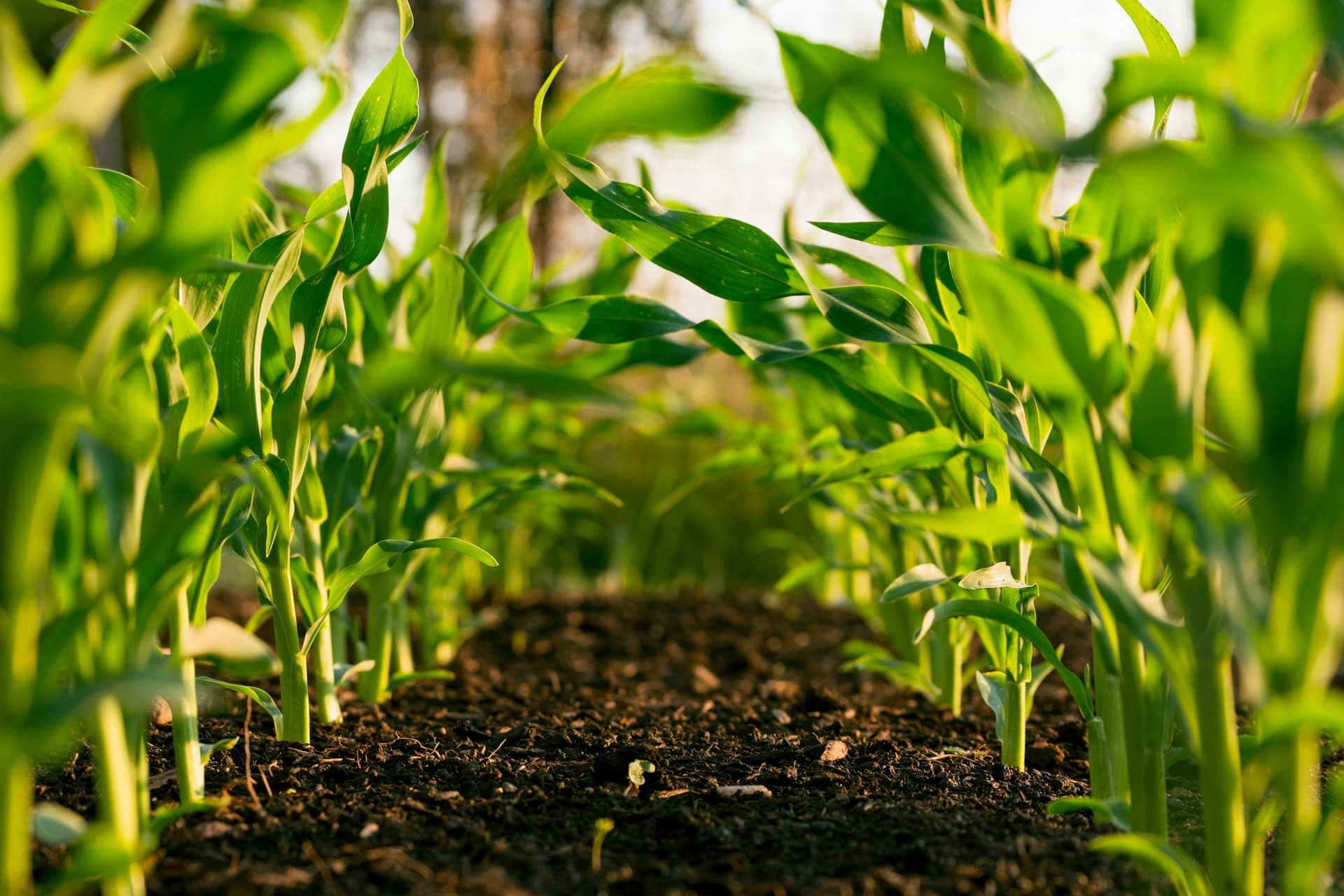
Three Time Horizons, One Parcel.
Every parcel is read from satellite imagery together with soil, climate, water and land data; the two sources corroborate each other. So past, present and near future meet in a single frame.
- Past
Static Risk & Historical Behavior
Hazard climatology, event history and fixed soil/land characteristics — the behavior a parcel has accumulated over the years.
- Present
Reading the Latest Signals
Current crop health, water balance and present state read against a baseline — phenology, water stress and anomalies.
- Near Future
Operational Decision Support
Frost, temperature, rainfall deficit, irrigation and spraying windows; the recurrence and trend profile of each hazard.
The Analyses the System Produces.
We process the same data with methods established in the academic literature and accepted internationally to produce 30+ distinct analyses. These turn into solution packages on both the compliance/reporting and the operational side; the modules below set out today's scope.
- 01
Planting / Sowing + Crop Verification
Proves from satellite data whether a parcel was planted, what was planted on it, and the accuracy of the area.
- 02
Parcel Health + Anomaly
Tracks in-season health, neighbour comparison and stress signals that need attention, per parcel.
- 03
Frost Risk Forecast
Frost-damage probability over 2-, 5- and 10-day windows, crop sensitivity and recommended action.
- 04
Drought / Water Stress
Multi-timescale drought indicators, a 14-day trend and a short-term drought forecast.
- 05
Insurance Pre-Assessment
Damage verification, affected-area mapping, adjuster prioritization queue and an evidence pack. For TARSİM and private insurers.
- 06
Yield Forecast
Yield distribution with confidence intervals, score rationale and the probability of a production shortfall. For lending and procurement decisions.
- 07
Irrigation + Fertilizer Plan
Daily irrigation need, a weekly plan, in-parcel zoning and a tractor-ready fertilizer dosage file.
- 08
Credit Production Score
An auditable score from 0-100. Rationale, alternative scenarios and reliability are shown explicitly. Designed in line with BDDK credit-risk guidance.
- 09
Seasonal Forecast + Portfolio Risk
Seasonal risk probability, portfolio risk distribution, accumulation map and reinsurance layer recommendation.
- 10
Carbon Monitoring + Sustainability
Annual net carbon flux, water footprint, organic-matter trend and a supply-chain emissions report.
- 11
Büyüme Simülasyonu
Sezon içi kuru/sulu beklenen verim oranı, su stresi ve biyokütle/örtü eğrisi; AquaCrop yoksa Ky su-stresi proxysi.
- 12
Hastalık ve Zararlı Erken Uyarı
Yaprak ıslaklığı/nem türevli enfeksiyon uygunluk pencereleri ve kaynaklı saha kontrolü önerileri. Tanı koymaz, pestisit dozu/aktif madde önermez.
From Parcel to Portfolio
From Parcel to Region, the Same Calculation.
Tarımus reads every parcel as the smallest unit and combines the results consistently from village to region and from region to portfolio. The level you need is the reading at that level.
Analyses do not stay as tables and vectors; they are painted back as overlay layers and colored maps — an actionable prescription on the parcel, a risk map across the portfolio.
Eight Product Lines from the Same Analysis.
A data and visibility foundation, analytical products, a trust layer and delivery/compliance — each line is designed for a specific institution and decision.
- 1
Supply Chain & Parcel Visibility
Buyer, supplier, producer, parcel, crop and season on a single data foundation: which crop comes from where, and which parcels are being monitored?
- 2
Crop & Season Verification
Verifying the declared crop, the parcel boundary and season activity against satellite/field data; a parcel confidence score.
- 3
Physical Climate & Production Risk
Drought, water stress, frost, heat, flood and production decline; a risk engine at parcel and portfolio level.
- 4
Scope 3 Carbon Accounting
A crop's kgCO₂e/kg, kgCO₂e/ha and total tCO₂e value; the emissions breakdown of purchased goods (Scope 3) and data quality.
- 5
Low-Carbon Practice & MRV
A layer that shows the impact of fertilizer, compost, residue and irrigation practices through monitoring, reporting and verification (MRV).
- 6
Evidence Vault & Auditable Data Chain
A system that stores the source, time and evidence behind every metric, calculation and finding.
- 7
Report / API / Dashboard / Export
The product layer that turns the analyses produced into PDF, Excel, DOCX, API and dashboard outputs.
- 8
TSRS / CSRD / GHG / Verra Mapping
A compliance layer that connects the same parcel and activity data to different reporting and carbon methodologies.
Explainability & Evidence Vault
No result is a bare prediction. Every output is tied to the observations, physical indicators and historical comparisons it rests on, and comes with a confidence level. The answer to “Where did this number come from?” is stored for every metric.
Natural-Language Layer
This entire data pool can be queried in natural language. This is not a generic chat assistant: it answers only from the traceable data the system itself produces. Everything it says can be traced back to its source.
Looking Ahead
From Analysis Toward Action.
The same foundation can be consumed directly by machines too. The system is positioned to feed its structured, traceable outputs as input to future automated farming systems — variable-rate irrigation/fertilization, autonomous equipment and farm management automation.
As the system is fed, the set of questions it can answer widens: how to raise yield, where risk concentrates, crop rotation, water allocation prioritization and climate-resilient crop transitions. Because everything underneath is pure physics, mathematics and verifiable data, the recommendations are not opaque predictions but decisions that carry their own rationale.
Book a CallInvitation
Let's Write the Next Chapter of Agriculture Together.
Food company, exporter, bank, insurer, cooperative or ESG advisor — let's talk through a pilot report for your sourcing region or portfolio. We'll listen, and we'll show you.